
Archangel Silver · Austin, Texas
Russian Blue Kitten Adoption FAQ
The questions families ask us most often before bringing a Russian Blue kitten home.
Clear Answers for Your Family
Find out how adoption works, what goes home with your kitten, and how to prepare for life together. If your question is not covered, we are happy to help. Browse questions about available kittens, deposits, the waiting list, health records and vaccinations, socialization, family requirements, homecoming, transportation, and the breed.
Pricing & Adoption
How much is a Russian Blue cat?
The full adoption price is $1,350 per kitten. A $400 reservation deposit is applied toward that total, leaving a $950 balance after the deposit.
Every kitten goes home with:
- Pedigree paperwork
- Vet signed health certificate
- Written 2 year genetic health guarantee
- Age appropriate FVRCP vaccinations and deworming
- Microchip pre registered to you
- Starter kit with food and a blanket carrying mom's scent
Send us a message to ask about availability, reservation, or payment of the $1,350 adoption price.
How do I reserve a kitten?
Start by reading a kitten's profile and completing an adoption application. We review your household, answer questions, and confirm availability before arranging a reservation.
- Reserve a kitten: $400. The deposit is applied toward the $1,350 adoption price, leaving a $950 balance.
- Join the waiting list: $200. This is credited toward the $400 reservation deposit when you select a kitten, subject to our agreement.
We provide the written terms and payment instructions directly. Submitting an application does not reserve a kitten or collect payment. We share updates while your kitten grows, then confirm pickup or delivery for homecoming at 13 weeks.
Complete an adoption application or join the waiting list. The written agreement explains deposit conditions and any transfer arrangements.
When can I take my kitten home?
Our current kittens are 10 weeks old and go home at 13 weeks, once health and readiness are confirmed. We are currently accepting reservations.
Before homecoming, kittens receive a veterinary check, two sets of vaccinations, deworming, and a microchip. We share their care records and feeding routine and help you prepare for the transition.
Can families visit before adopting?
Visits may be arranged by appointment in Austin after an initial conversation. Scheduled visits protect young kittens, nursing mothers, and the privacy of our home. When an in person visit is not practical, we can arrange a live video introduction so your family can see the kitten, meet us, and ask questions before making a reservation.
Do you ship kittens? How does delivery work?
Personal pickup in Austin is by appointment and has no shipping fee. Families farther away can discuss a flight nanny, licensed ground transport, or airline cargo when a suitable pet program and route are available.
We confirm the travel method, health documents, carrier requirements, weather restrictions, timing, and costs before booking. An airline or travel option is not guaranteed until confirmed for your kitten.
Explore pickup and delivery options or contact us for a personalized quote.
Our Cattery & Your Kitten
Are your Russian Blue kittens purebred?
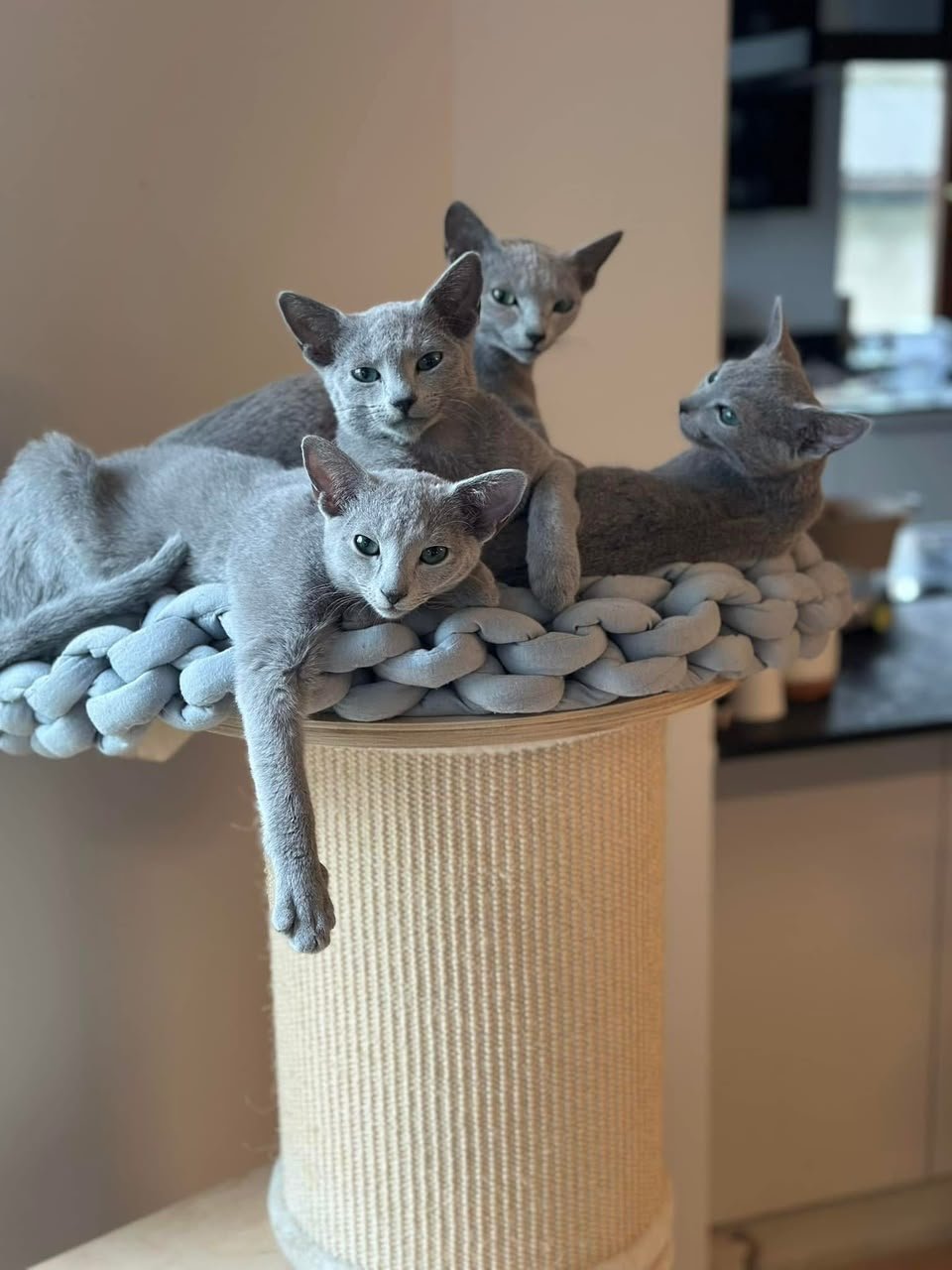
Yes. Archangel Silver raises purebred Russian Blue kittens from pedigreed parents selected for health, temperament, structure, silver blue coat quality, and the characteristics associated with the breed. Each kitten goes home with pedigree documentation and bloodline records. You can meet Luna and Maxim on our Queens and Studs page.
What is included with a Russian Blue kitten adoption?
Your kitten goes home at 13 weeks with a veterinary check and care records, two sets of vaccinations, deworming, a microchip, a breeder slip for TICA registration, starter supplies, a 30-day Trupanion pet insurance trial, and a written two-year genetic health guarantee.
Lifetime breeder support is included. The kitten profile shows the full inclusions, price, and reservation details.
What is your health guarantee?
Every kitten comes with a written two-year genetic health guarantee. The agreement explains the conditions covered, veterinary requirements, exclusions, and how to raise a concern.
We provide the written terms before payment so you can review them and ask questions. Our support also continues after homecoming.
What vaccinations do the kittens receive?
Our kittens leave with two sets of vaccinations, a veterinary check, deworming, and a microchip. Their records show the treatments given and the next care due.
Homecoming at 13 weeks does not mean the full vaccination course is complete. Your veterinarian will use the records to plan remaining vaccinations and preventive care for your kitten.
Do you provide support after adoption?
Yes. Our support continues after your kitten goes home. Families can contact us with questions about feeding, litter box routines, grooming, behavior, introductions to children or pets, and the transition into a new home. Veterinary concerns should always be handled by a licensed veterinarian, but we remain available for practical breeder guidance throughout your cat's life.
Family Life & Everyday Care
Are Russian Blue cats hypoallergenic?
No cat breed is guaranteed to be non-allergenic. Russian Blues can still cause allergic reactions, and a short coat or less visible shedding does not guarantee comfort for someone with allergies. If a family member has cat allergies, discuss them with an allergist before deciding to adopt. Please also read our allergy policy before applying.
Are Russian Blues good with children and other pets?
Generally, yes. They're a gentle breed and rarely react with claws or teeth, most will leave the room before they'd swipe at anyone. A few notes:
-
Children. Fine with respectful kids. They prefer not to be chased or grabbed, so younger children do best with a little supervision early on.
-
Other cats. Usually integrate well, especially as kittens. Many of our families take two so they always have a playmate.
-
Dogs. Depends on the dog. A calm introduction and a few cat only zones (tall perches, a quiet room) make this easy.
They tend to be shy with strangers at first and warm up over a few visits, that reservation is part of what makes them such steady indoor companions.
What is the personality of a Russian Blue cat?
Russian Blues are easy to live with. If we had to describe the breed in five lines:
-
Affectionate, not clingy. They like being in the same room as you more than they like being in your lap every minute.
-
Smart. Many learn fetch, respond to their name, and figure out cupboard doors faster than you'd like.
-
Quiet. A soft chirp rather than the loud, persistent meow of some breeds.
-
Playful into adulthood. Don't expect them to slow down at two years old.
-
Loyal. They tend to bond closely with one or two people in the house.
They notice changes in routine and don't love sudden chaos, a fairly steady home is where they're at their best.
Are Russian Blue kittens already litter box trained?
Yes. By the time they leave us they've been using the box reliably for weeks. We use unscented clumping litter, using the same kind for the first couple of weeks at home avoids any confusion, and you can switch brands gradually after that.
A few setup notes that help:
- Put the box somewhere quiet but easy to reach, not next to a noisy appliance
- Show your kitten where it is the moment they arrive
- Scoop daily, they're picky and won't use a dirty box
- One box per cat plus one spare is the usual guideline
How active are Russian Blue cats?
Moderately active. They have bursts of energy and love wand toys, climbing, and laser pointers, but they sleep a lot too, 12 to 16 hours a day is normal for an adult.
What keeps them happy:
- A wand toy session in the evening, ten or fifteen focused minutes goes a long way
- A tall cat tree or a couple of wall shelves so they can perch
- A puzzle feeder or two, rotated with other toys so nothing gets stale
They're smart and get bored if everything stays in the same place for months. Switching toys around every few weeks costs nothing and keeps them interested.
Can Russian Blues live in apartments?
Yes, they're well suited to apartments. A few reasons:
-
Quiet. Soft voice. Neighbours won't hear them.
-
Prefer indoors. They aren't door dashers and don't push to get outside.
-
Compact. Medium sized at 7 12 lb. They don't need much floor space.
Add a cat tree or two wall shelves for some vertical room, a scratching post, and a daily play session and you're set.
How big do Russian Blue cats get?
Russian Blues are medium sized cats with an elegant but muscular build. Adult females commonly weigh about 7 to 10 pounds, while adult males often weigh about 10 to 12 pounds. Genetics, diet, activity, and overall health influence adult size. A veterinarian can help you maintain a healthy body condition as your kitten matures.
How long do Russian Blue cats live?
Kept indoors and given normal preventative vet care, most Russian Blues live 15 to 20 years. Plenty make it into their early twenties. It's a hardy breed with relatively few hereditary problems compared to some other purebreds.
A few things that help them get there:
- Indoors only, avoids cars, predators, parasites, infectious disease
- Annual vet check ups, plus dental cleanings when needed
- Measured meals to keep weight in a healthy range
If something does come up that's covered by the 2 year guarantee, you have a written contract that lays out exactly what we'll do. And we're a phone call away long after the warranty period ends.
Preparing for Homecoming
What do Russian Blue kittens eat?
We send you the kitten's current food and feeding routine before homecoming, along with a starter supply of familiar food. Keeping that routine familiar helps with the transition.
Choose a complete food appropriate for kitten growth and ask your veterinarian about portions, feeding frequency, and any planned changes. Keep fresh water available. Food suitability cannot be judged from an ingredient list alone.
Do Russian Blues require a lot of grooming?
No, it's a low maintenance coat. The short, dense fur doesn't mat. A typical week looks like this:
-
Brushing: Once or twice weekly with a soft brush or grooming glove to remove loose hair
-
Bathing: Rarely needed maybe 2 to 3 times per year or as needed
-
Nail trimming: Every 2 to 3 weeks
-
Dental care: Regular teeth brushing recommended
-
Ear cleaning: Check and clean as needed
They are fastidious self groomers, so the silver sheen comes naturally, no special shampoos or coat sprays needed.
A Comfortable First Week
What Should I Prepare Before Bringing My Kitten Home?
Still Have a Question?
Tell us about your household and the companion you hope to welcome. We will respond within 24 hours. Please check your spam or junk folder as well as your inbox.