History, temperament, and care — written by an Austin breeder
Breed Guide
Quiet, intelligent, and low shedding. Russian Blues are calm indoor cats with a dense silver blue coat and bright green eyes — a good fit for families, apartment dwellers, and people with mild cat allergies.
Est. 1860s
The breed is named for Arkhangelsk (Archangel), a port city in northern Russia where these cats were kept by sailors and traders. They reached England and Northern Europe in the 1860s, where breeders began documenting and standardizing the type.
Russian Blues were shown at the first organized cat show at London's Crystal Palace in 1875 under the name "Archangel Cat." Queen Victoria is often credited with helping popularize the breed in Britain during that period.
World War II nearly wiped out the breed. Breeders in England and Scandinavia rebuilt the bloodlines, sometimes outcrossing to Siamese and British Blues to keep the gene pool viable. Russian Blues reached the United States in the 1940s and have grown steadily in popularity ever since.
Authoritative Sources:
Breed Standards
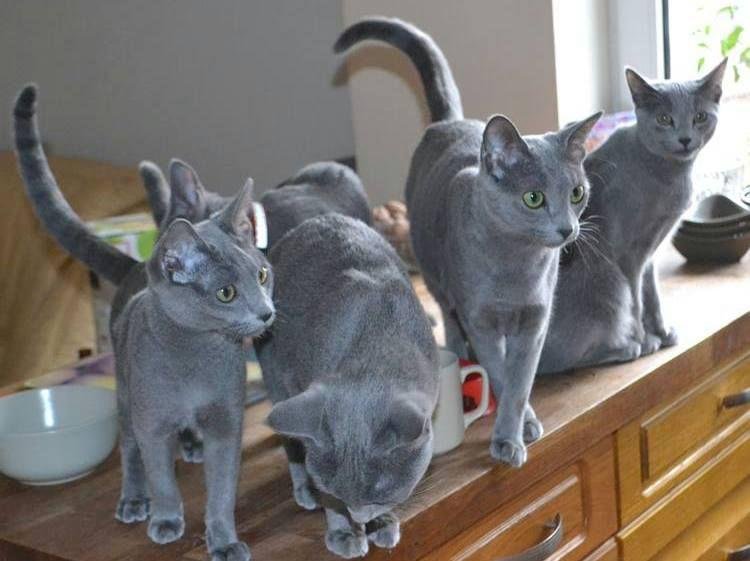
Short, dense double coat. Solid blue gray with silver tipped guard hairs that catch the light
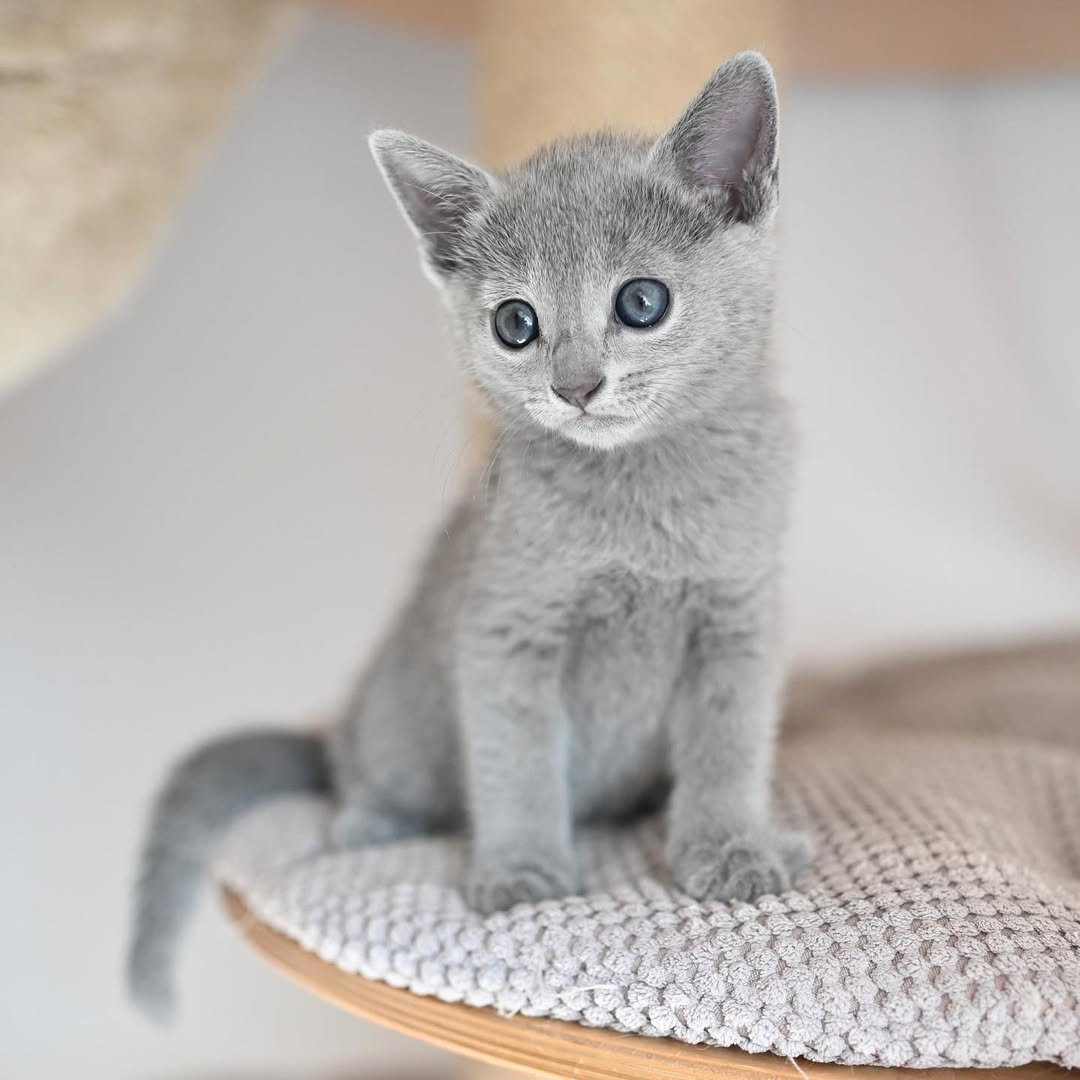
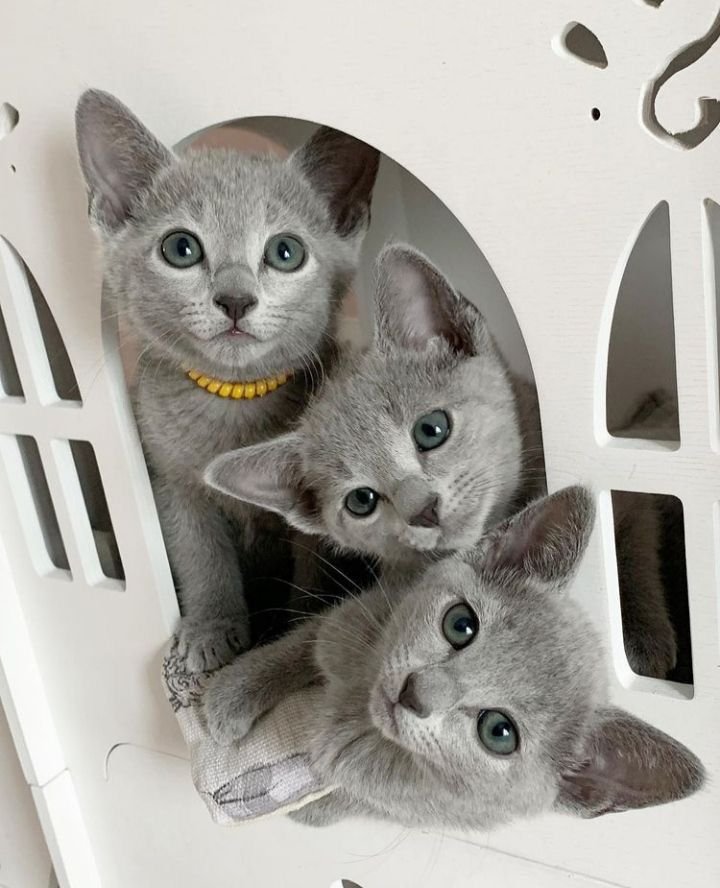
Vivid emerald green (kittens born with blue eyes that change by 4 months)
Medium sized, males 10 to 12 lbs, females 7 to 10 lbs
Elegant, muscular, fine boned with long legs and graceful movement
Wedge shaped with prominent whisker pads and refined features
Large, wide set, slightly pointed with thin skin
Long and tapering, proportionate to body length
15 to 20 years with proper care and nutrition
Personality Traits
Russian Blues form deep bonds with their families. They're loving and devoted without being overly demanding of attention. See our available kittens ready for adoption.
Quick learners who can be trained to play fetch, open doors, and even walk on a leash. They love puzzle toys and interactive games. Learn more about caring for your Russian Blue kitten.
Soft spoken and well mannered. Perfect for apartments and close living quarters. They communicate with gentle chirps.
Reasons Families Choose Them
A quick look at what makes this breed easy to live with
Produce less Fel d 1 protein, making them ideal for people with cat allergies.
Short coat requires minimal grooming—just weekly brushing to maintain their shine.
Few genetic health issues. Typically live 15 to 20 years with proper care.
Gentle with children and get along well with other pets in the household.
Perfectly content living indoors. No need for outdoor access or supervision.
Form deep bonds and often follow their favorite person around the house.
Essential Care Guide
Brush once a week to remove loose hair. Their coat naturally repels dirt. Trim nails every 2 to 3 weeks. Clean ears monthly with a gentle solution.
High quality protein rich cat food. Russian Blues can be prone to obesity, so monitor portions carefully. Fresh water should always be available.
Moderately active. Provide cat trees, toys, and interactive play sessions daily. They love puzzle toys, feather wands, and laser pointers.
Annual vet checkups recommended. Keep vaccinations current. Generally healthy breed with few genetic issues. Expected lifespan: 15 to 20 years.
Daily Life
What to expect once your kitten settles in at home
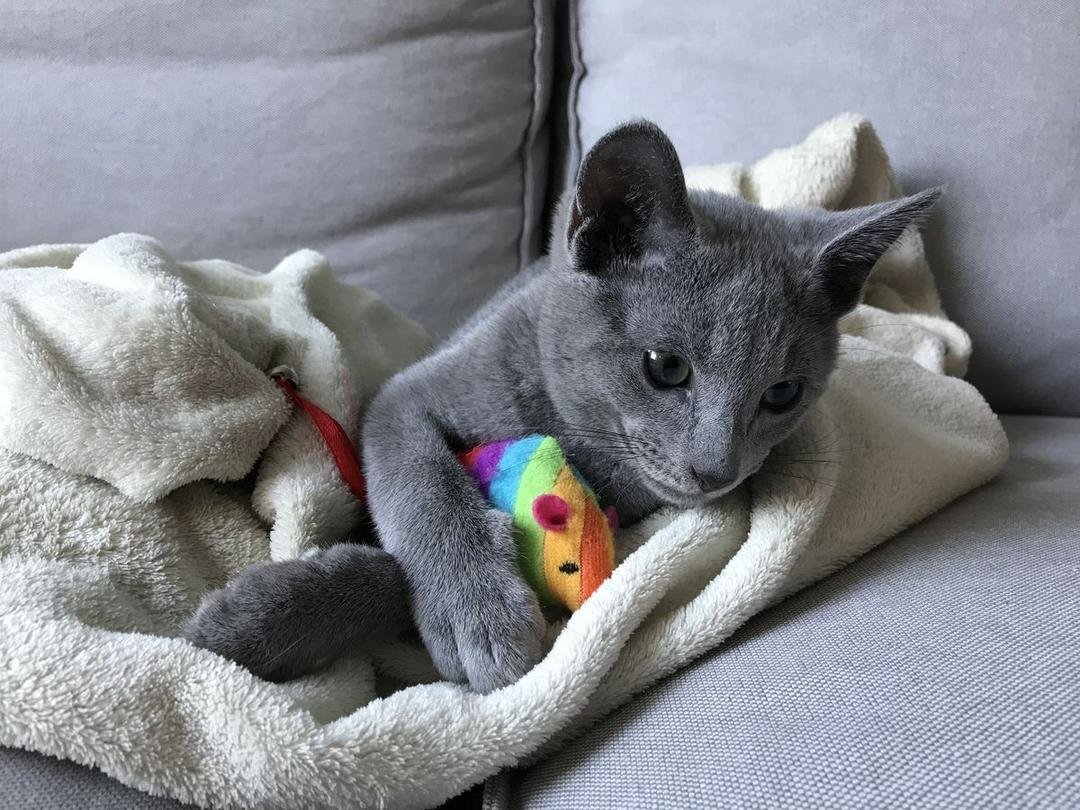
Russian Blues are creatures of habit who thrive on routine. They'll quickly learn your schedule and often greet you at the door when you arrive home. Many owners report their Russian Blue acts as a gentle alarm clock, waking them at the same time each morning with soft chirps.
These cats are naturally reserved with strangers but incredibly affectionate with their family. Don't be surprised if your Russian Blue chooses one person as their "favorite," though they'll show love to all household members. They're known for following their chosen person from room to room, always wanting to be nearby.
Russian Blues are playful well into adulthood. They love interactive toys, especially those that challenge their intelligence. Puzzle feeders, feather wands, and laser pointers are favorites. Many Russian Blues can be taught to play fetch and will bring toys back repeatedly.
Russian Blues adapt well to various living situations, from apartments to large homes. They're perfectly content as indoor only cats and don't require outdoor access. A quiet, stable environment suits them best, as they can be sensitive to loud noises and chaotic households.
Provide vertical spaces like cat trees or shelves where your Russian Blue can observe their domain from above. They love high perches and will often choose the highest spot in a room to relax. Window perches are also appreciated, as they enjoy watching birds and outdoor activity.
These cats do well in homes with other pets, especially if introduced properly. They're gentle with respectful children and can form strong bonds with cat friendly dogs. However, they appreciate having quiet spaces to retreat to when they need alone time.
Expert Answers
While no cat is 100% hypoallergenic, Russian Blues produce significantly less Fel d 1 protein (the primary allergen in cat saliva and skin) compared to other breeds. Many people with mild to moderate cat allergies find they can live comfortably with a Russian Blue. Their dense double coat also traps more dander close to the skin. However, we always recommend spending time with Russian Blues before committing if you have allergies.
Yes! Russian Blues are known for their gentle, patient nature. They do wonderfully with respectful children who understand how to interact with cats gently. They're also excellent with other cats and cat friendly dogs, especially when properly introduced. Their calm demeanor makes them ideal family pets. However, they appreciate having a quiet retreat space when household activity becomes overwhelming.
Russian Blues have a dense double coat, but they shed moderately—less than many other breeds. They typically have two heavier shedding periods per year (spring and fall) when they transition their coat. Weekly brushing is usually sufficient to manage shedding and keep their coat looking beautiful. Their coat naturally repels dirt, so they stay cleaner than many other breeds.
Both males and females make wonderful companions. Males tend to be slightly larger (10 to 12 lbs vs 7 to 10 lbs) and may be more outgoing and playful. Females are often more reserved and selective about affection, though equally loving with their chosen people. When spayed or neutered, personality differences are minimal, and individual temperament varies more than gender based traits.
Russian Blues are generally quiet cats with soft, gentle voices. They communicate with soft chirps, trills, and quiet meows rather than loud yowling. They're much less vocal than breeds like Siamese. When they do "talk," it's usually to greet you, request food, or engage in conversation. Their quiet nature makes them perfect for apartment living.
Russian Blues are one of the healthiest cat breeds with very few genetic health issues. They're not prone to the heart disease (HCM) or kidney issues common in some breeds. Their main health concern is obesity, as they love food and can overeat if portions aren't monitored. With proper diet, regular vet checkups, and preventive care, Russian Blues typically live 15 to 20 years. Some have been known to live into their early 20s.
Breed Comparison
Understanding what makes Russian Blues unique among popular cat breeds
| Characteristic | Russian Blue | British Shorthair | Siamese | Maine Coon |
|---|---|---|---|---|
| Hypoallergenic | Yes | No | No | No |
| Vocal Level | Quiet | Quiet | Very Vocal | Moderate |
| Grooming Needs | Low (Weekly) | Low | Very Low | High (Daily) |
| Activity Level | Moderate | Low | Very High | Moderate |
| Good with Kids | Excellent | Excellent | Good | Excellent |
| Intelligence | Very High | Moderate | Very High | High |
| Lifespan | 15 to 20 years | 12 to 17 years | 12 to 15 years | 12 to 15 years |
Champion Bloodlines
Did You Know?
A few things first time owners are always surprised by
Their unique mouth shape creates the appearance of a permanent slight smile, giving them a mysterious, Mona Lisa like expression.
Each hair is tipped with silver, creating a shimmering, iridescent effect that makes their coat appear to glow in certain lighting.
Kittens are born with blue eyes that gradually change to vivid emerald green by 4 months—a stunning transformation to witness.
Russian czars kept these cats in their palaces, believing they brought good fortune and prosperity to the royal family.
Russian Blues can figure out how to open doors, cabinets, and puzzle toys. Many owners report their cats "training" them rather than the reverse!
They have an uncanny sense of time and will remind you when it's mealtime, playtime, or bedtime with remarkable precision.
Many Russian Blues are fascinated by running water and will play with faucets, water fountains, or even join you in the shower!
Their paw pads are mauve or lavender pink, a unique trait that distinguishes them from other gray cat breeds.
They're highly attuned to their owner's emotions and will often provide comfort when you're feeling down or stressed.
Buyer's Guide
Essential tips for choosing a healthy, well bred Russian Blue
At Archangel Silver, we follow every item on this checklist. Our Russian Blue kittens are raised inside our Austin, Texas home, come from champion titled parents (Luna and Maxim), and go home with a written health guarantee. Five years of breeding has taught us that matching the right kitten to the right family matters more than rushing a sale.
See who is available right now, or send us a note with your questions.